


The once-destroyed community that's now a global energy giant
The once-destroyed community that's now a global energy giant

Nathalie Jimenez - Business reporter Thu, July 30, 2026 at 2:30 AM UTC
0
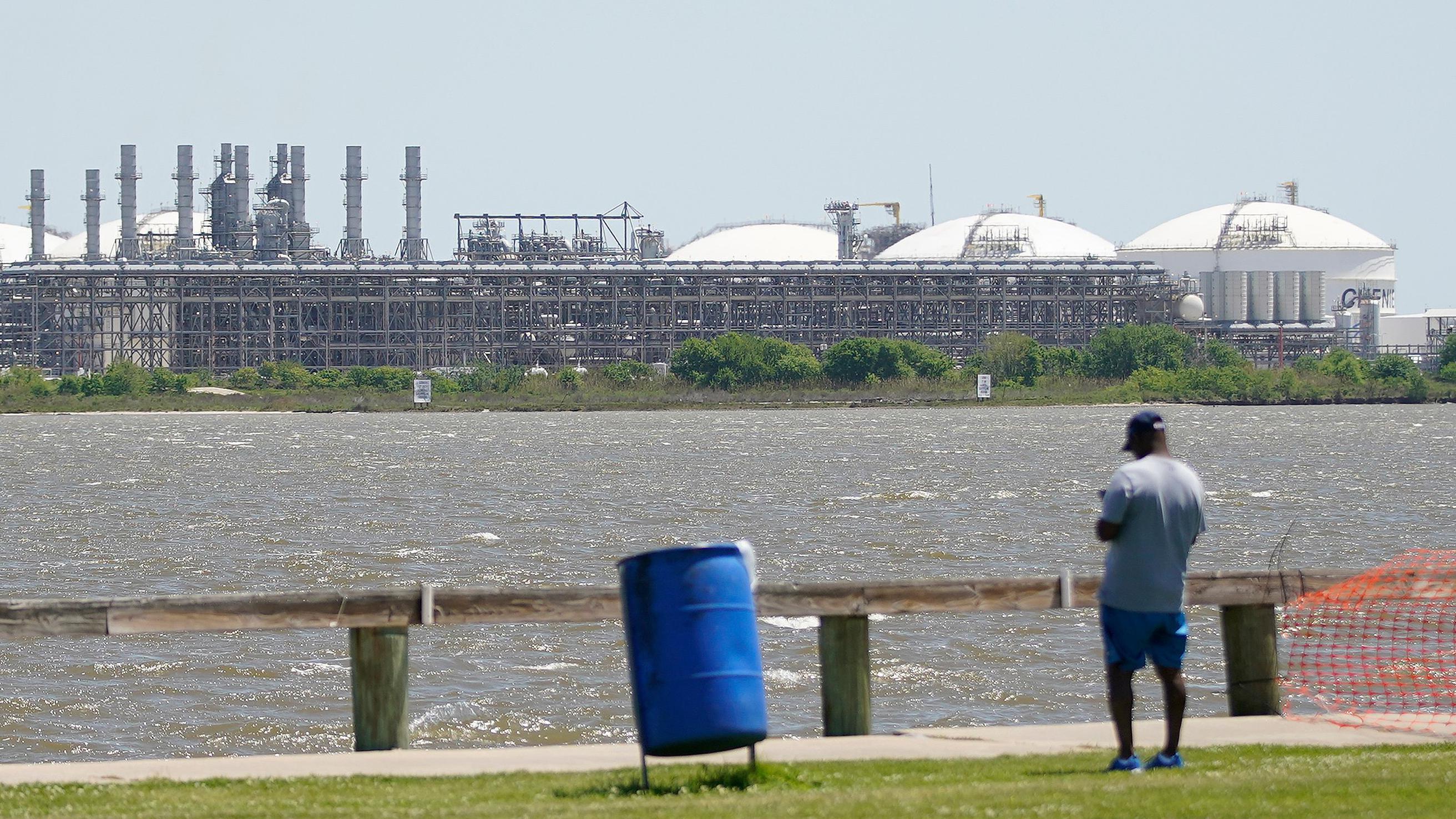
The Sabine Pass liquid natural gas export terminal in Cameron Parish, Louisiana, is the world's largest
Michael Fewell points out that his corner of Louisiana has seen a remarkable improvement in its fortunes.
Back in 2005, Hurricane Rita ripped through the coastal county of Cameron Parish, destroying or badly damaging more than 90% of homes, with a repair bill of $2.75bn (£2bn).
"It looked like a war zone," says Fewell, who was 16 at the time.
He spent days driving his truck around towns, collecting dead cattle flung into people's homes and lining the roads. Between stops, he watched National Guard helicopters fly in vital drinking water.
"They were, by far, some of the darkest days of my life."
Fast forward to today, and Fewell is now president of the elected council that runs the county.
And he says that Cameron Parish, population approximately 4,700, is on course to become one of the wealthiest counties in the region. "We are going to have more money than we need."
It is all down to the export of liquefied natural gas (LNG).
Canada signs landmark LNG energy deal with Germany
Oil price dives as US and Iran pause attacks
What is LNG and why has it become so important?
Today on a marsh in Cameron where cattle once grazed sits the world's largest LNG export terminal - Sabine Pass, which started to send the fuel overseas in 2016.
LNG is created by super-chilling natural gas down to -162C (-260F), which condenses it into a liquid. This reduces its volume by 600 times, requiring significantly less space for its storage and transportation by tanker ships.
Sabine Pass alone can process 29.5 million tonnes a year. The county is also home to another two LNG terminals, and a fourth is under construction.
Work on the latter, called Commonwealth LNG and costing $13bn, started in May. It is expected to produce 9.5 million tonnes of LNG a year by 2030 - enough to heat six million homes.
Across all its LNG terminals, Cameron Parish is projected to receive tax revenues of more than $4bn over the next decade.
Go back a decade and the US barely exported any LNG, but it is now the world's biggest supplier, and Louisiana ships around 60% of it, sourced via pipelines from elsewhere in the state, Texas, and even from as far away as Pennsylvania.
Two thirds of the Louisiana's LNG exports go from Cameron.

Michael Fewell says that Cameron Parish now has a bright future
Tim Wyatt, president of Commonwealth's parent company, Caturus, says that amidst global instability the US is experiencing an LNG boom for a reason. "There is cheap, abundant supply here, while being a flexible, reliable, relatively low cost and transparent producer that flows to the places that need it the most."
It's boom time for Cameron, but not everyone sees this as a positive. LNG tankers are so large that shipping channels must be dug deeper and wider.
And if the dredged mud isn't contained properly, it spills into nearby waters. In one incident last year, around 15,000 cubic yards of removed material spread beyond its permitted area.
Fewell doesn't deny some local annoyance. "There is a lot of ship traffic and there's been some frustration, it's fully understood."
Advertisement
When asked about pushback from the local community, he points instead to the wealth creation. He says that median local household income was $75,000 in 2024, up by a quarter from $59,555 in 2010.
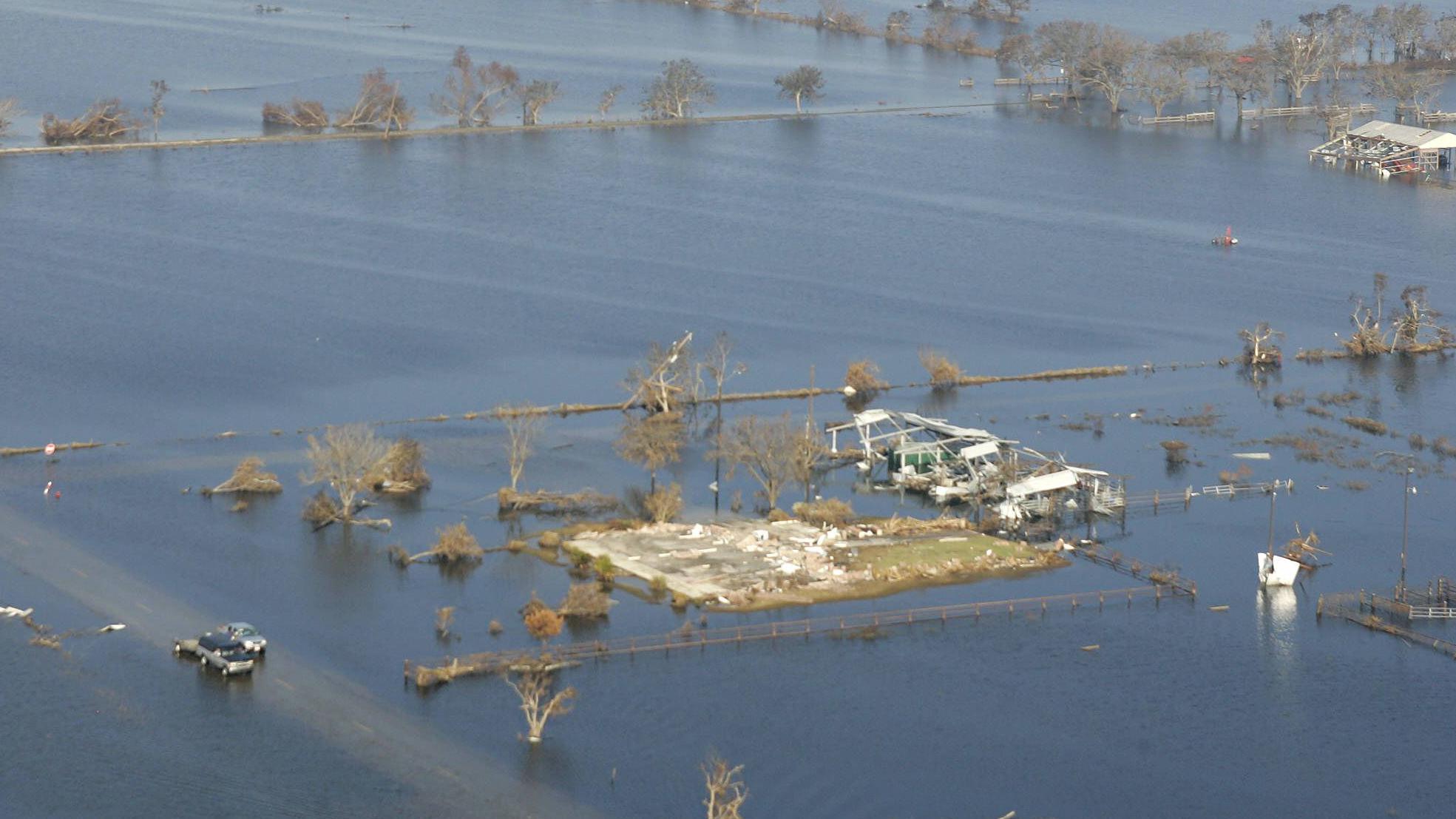
Cameron Parish was devastated by Hurricane Rita in 2005
Much of the overseas demand for American LNG comes from Europe, which following Russia's invasion of Ukraine in 2022 rushed to replace Russian natural gas.
This year's US-Israel conflict with Iran has only increased Europe's reliance on American LNG, as Iran's efforts to block the Straight of Hormuz has hit LNG exports from another key exporter, Qatar.
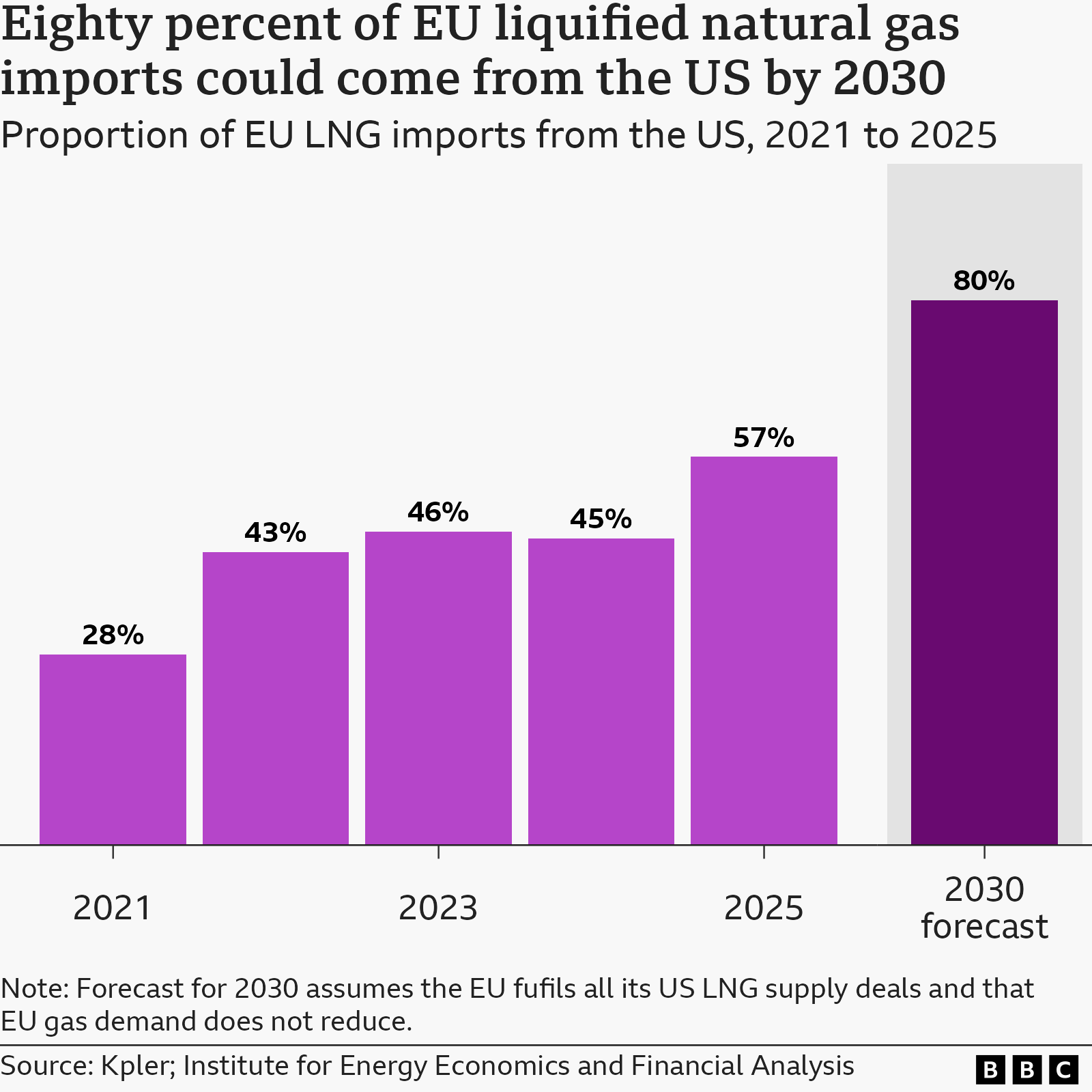
The US now supplies about two-thirds of Europe's gas imports, up from roughly a quarter in 2021, according to energy analysts at the Institute for Energy Economics and Financial Analysis.
Susan Bourgeois, secretary of Louisiana Economic Development, says that the state's LNG exports have helped Europe improve its supply security.
"They want reliable relationships for their energy," says Bourgeois. She points to buyers across Europe signing longer-term contracts since the invasion, not cargo-by-cargo as before. "It's about dependability and predictability, that's what matters."
That dependence has a cost, argues Ana Maria Jaller-Makarewicz, an analyst for the Institute for Energy Economics and Financial Analysis global think tank. She says that Europe is now reliant on US LNG supplies, and competing with Asia for the same cargoes, which pushes up prices.
She says that the EU is expected to get as much as 80% of its LNG imports from the US by 2030.
Nowhere is that exposure felt more sharply than in Germany, the EU's biggest manufacturer, producing more than a quarter of the block's industrial output.
At InfraLeuna, a vast chemicals and plastics industrial park in central Germany, boss Christof Guenther has watched his site's annual gas bill climb from €60m ($68m; £51m) before the war in Ukraine, to an expected €200m this year amid the Iran crisis.
American gas isn't the answer, he says. "[Domestic] natural gas prices in the US are about 20 to 25% of the prices we are paying here." After being turned into LPG and shipped across the Atlantic the price shoots up.
With natural gas accounting for 12% of German power generation, and with half of German homes fitted with gas boilers, German households are also being affected.
The average home now pays 31% more for its electricity than before the Ukraine war, according to Clean Energy Wire, a Berlin-based news outlet covering Germany's energy transition. Gas prices for German households are also up over that period, over 74%, per the same source.
That is replicated across the European Union, where household electricity bills have risen 30% since 2021, according to official Eurostat figures.
Meanwhile, UK electricity prices are now around 38% higher than in mid-2021, while gas prices are at a 120% increase, according to data by regulator Ofgem.
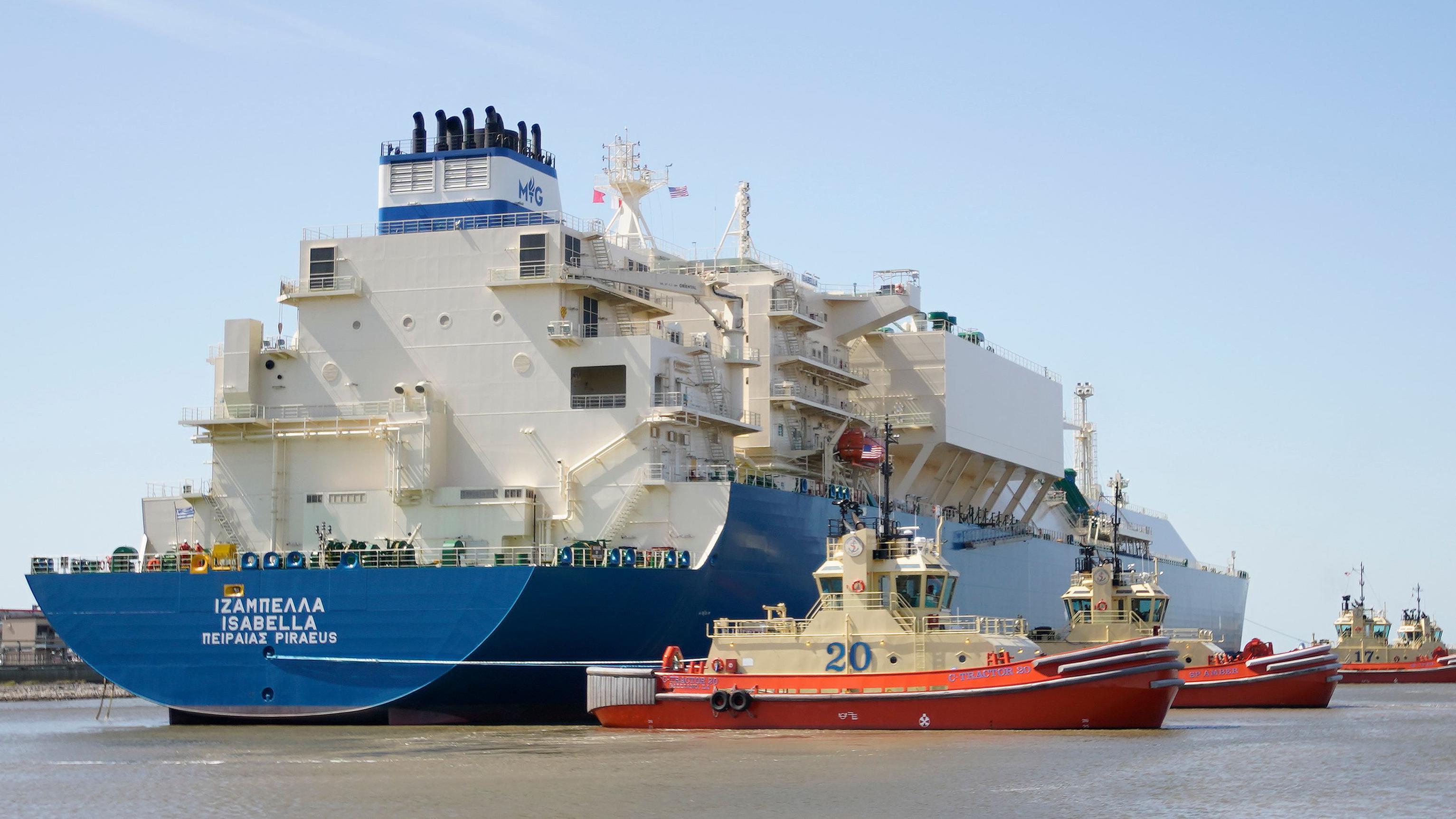
Vast tanker ships go in and out of Cameron Parish to transport the LNG
Jaller-Makarewicz says this is the new normal until the EU reduces its gas consumption.
However, a 2025 US-EU trade deal, committing Europe to $750bn of American energy over three years - including LNG, oil and nuclear fuel - locks the relationship in further.
Back in Cameron, Fewell is less concerned with Europe's anxieties than with what the boom means for a community finally going from survival to hope.
"If I had one dream," he says, "it's to bring our youth back to our parish." His own children can look ahead to high-paying jobs without leaving home, a future he never thought possible while growing up there.
For a parish nearly emptied out 20 years ago, the LNG powering and heating Europe may be what allows it to thrive.
Read more global business stories
-
New era for Gibraltar with removal of 118-year-old border controls with Spain
Wealthy AI workers send San Francisco house prices soaring
'We had to get out of the way': The backlash over delivery robots
Why I sold my business to my staff

Source: “AOL Money”
